Eminem Biography
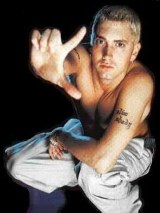 Eminem, born Marshall Bruce Mathers III, October 17, 1973, Kansas City, Missouri, USA. This white rapper burst onto the U.S. charts in 1999 with a controversy over the horrorcore genre. Mathers endured an itinerant childhood, living with his mother in various states before eventually end up in Detroit at the age of 12 years. He took the rap in high school before giving up in ninth grade, joining ad hoc groups Basement Productions, the New Jacks, and D12. Eminem, born Marshall Bruce Mathers III, October 17, 1973, Kansas City, Missouri, USA. This white rapper burst onto the U.S. charts in 1999 with a controversy over the horrorcore genre. Mathers endured an itinerant childhood, living with his mother in various states before eventually end up in Detroit at the age of 12 years. He took the rap in high school before giving up in ninth grade, joining ad hoc groups Basement Productions, the New Jacks, and D12.
The newly named Eminem released a raw debut album in 1997 through independent label FBT. Infinite was poorly received, however, with Eminem earning unfavorable comparisons to leading rappers such as Nas and AZ. Determination to succeed was given a boost by an important feature in the Source column Unsigned Hype, and he won his revenge on his former critics when he won the Wake Up Show Freestyle Performer of the Year, and finished runner-up in annual reports the Los Angeles Olympics Rap.
The following year, it's The Slim Shady EP, named after his sinister alter-ego, featured some vitriolic attacks on his detractors. The stand-out track, "Just Do not Give A Fuck", became an underground hit very popular, and led to appearances on MC Shabaam Sahddeq of "five star general" single and Kid Rock Devil without a Cause set. As a result, Eminem was signed to Aftermath records by label boss Dr. Dre, who adopted the young rapper as his protege and acted as co-producer on Eminem's full length debut.
Dre beats featured prominently on The Slim Shady LP, a provocative feast of violent, twisted lyrics, with a moral outlook partially redeemed by Eminem's claim to be only "express" the thoughts of the Slim Shady character. Parody or no parody, lyrics to songs such as "97 Bonnie & Clyde" (which contained lines to kill the mother of his child) and frequent verbal outbursts about his mother were held by many, even outside the usual Christian moral majority, to be deeply irresponsible. The album was supported by the commercial success of the singles "My Name Is" and "Guilty Conscience" (the former helped by a striking, MTV-friendly video), and climbed to number 2 on the album chart States United in March 1999.
Eminem subsequently made high profile appearances on Rawkus label "Volume 2 compilation and Missy Soundbombing" Misdemeanor "Elliott Da Real World. It was also in the news when his mother filed a lawsuit claiming that comments made by rapper in interviews and on The Slim Shady LP had caused, among other things, emotional distress, damage to reputation and loss of self esteem. None of which harmed the sales followed by Eminem album The Marshall Mathers LP, which debuted at number one on the album chart in the U.S. in May 2000 and to the most successful rapper since the golden age in the mid 90 2Pac and Snoop Doggy Dogg. At the end of the year, however, his troubled personal life and a serious assault charge had removed the gloss from his phenomenal commercial success. Despite criticism from gay rights groups , the rapper swept up three Grammy Awards the following February. He also met with colleagues to save the D12 chart-topping Devil's Night Transatlantic.
The new studio album from Eminem, The Eminem Show, was created by single "Without Me". The track, which debuted at UK number one in May 2002, presented a sample of "Buffalo Girls" and Malcolm McLaren was supported by a controversial video which saw the rapper dressing up as Osama bin Laden. The album debuted at number one on both sides of the Atlantic. Later that year, Eminem made his debut public acting in 8 Mile. The first single from the soundtrack, "Lose Yourself", the rapper gave his first number in the U.S. a single bed in November.
|



 RSS Feed XML Sitemap HTML Sitemap Privacy Policy